




Frenkie and Marčelo – a conversation about 'muralization of hate': We're talking (to) walls
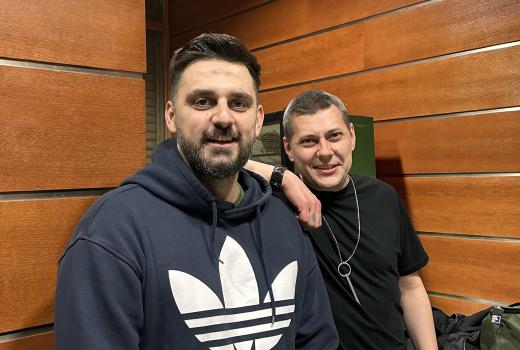
Frenkie and Marčelo – a conversation about 'muralization of hate': We're talking (to) walls
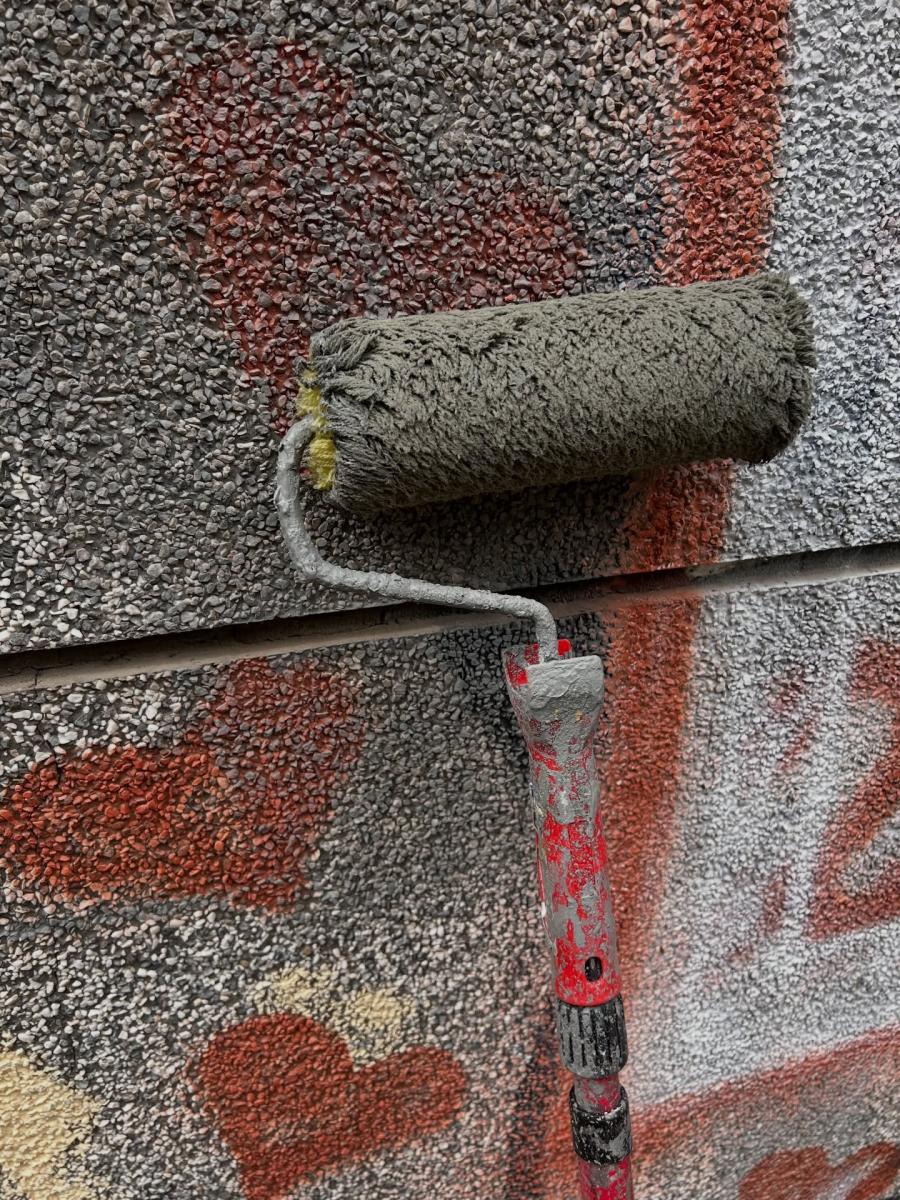
Do we have enough colour and courage to literally and metaphorically – paint over the nineties?
photo: Provided to Mediacentar
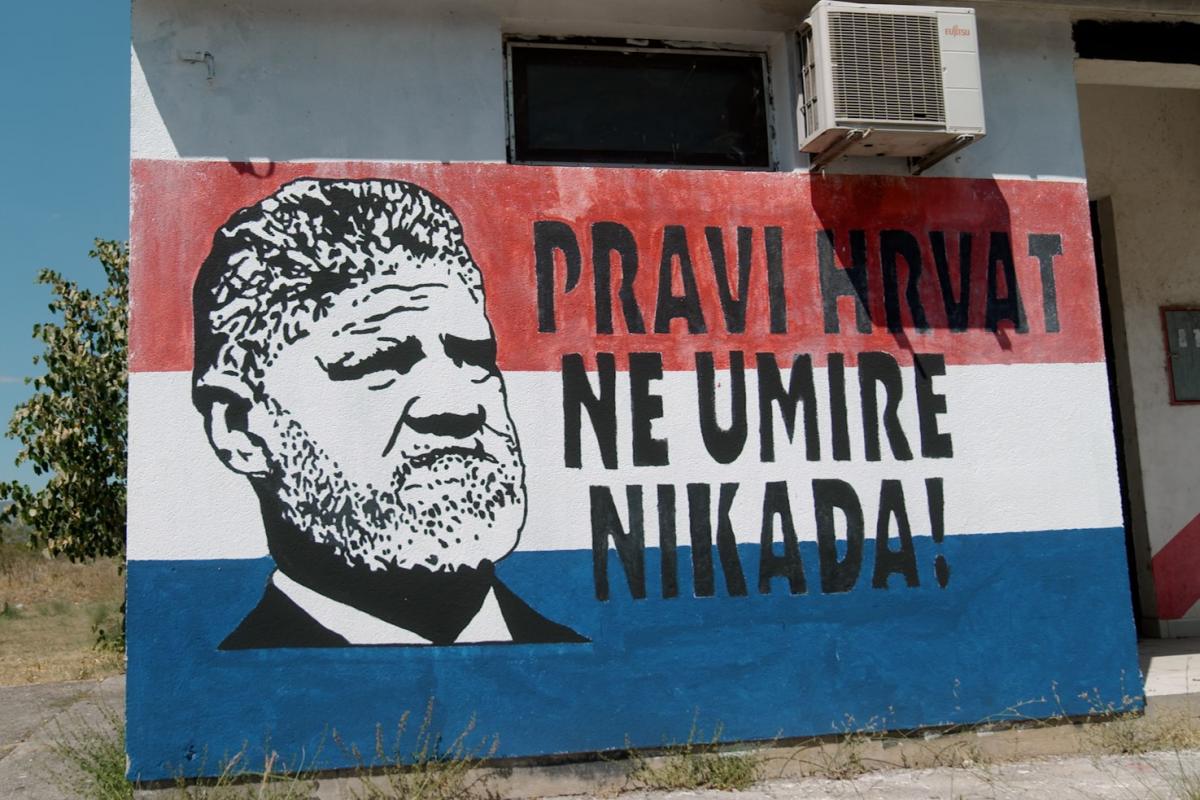
Many publications have been published, research conducted, debates held, and numerous media stories have been told about the wars of the 1990s in the area of the community called Yugoslavia and the war crimes committed there. However, a special phenomenon has appeared on the walls, those we pass by every day and on which murals of war criminals are painted, messages evoking wars or expressing hate speech are written. In many environments – especially in Serbia and Bosnia and Herzegovina – it is impossible to walk down the street and not see, not read or not try to think about these dark characters from the 1990s, or messages like kill, slaughter, army, war… and not feel any reaction.
As a special type of art of painting on facades, graffiti and murals have elsewhere been just that – a communication channel and a form of art. In the Balkans, apart from local and regional graffiti scenes, they often serve as something else – a means of spreading harmful narratives, a space for glorifying war criminals, denying crimes and ignoring court verdicts, and ultimately a conscious avoidance of facing the past and writing some other and different, redrawn history.
Marko Šelić – Marčelo and Adnan Hamidović – Frenkie were invited to speak about this for Mediacentar Sarajevo and Pro Peace. For both of them, street art is part of what their calling entails (the word calling is deliberately used rather than job), as one of the foundations of the hip-hop culture in which they operate and which they promote. This includes painting walls with graffiti, murals and other works of urban culture. They are very active in their communities, societies, but also across the borders of the countries in which they live. They are not only musicians, but also activists and writers, in fact, the ideal choice for this article, which was not prepared according to standard journalistic templates and usual schemes, but as a dialogue, discussion, correspondence and providing an answer to the question: do we have enough colour and courage to literally and metaphorically – paint over the nineties?
Hijacked walls
Marčelo: "Evil tongues" say that, in the endless process of transition, we’ve gotten nowhere and that as a society, we’ve hit rock bottom. Or perhaps it would be more accurate to say that we’ve hit a wall: if you look at today's urban landscape, you can see the traces of that blow on the facades. Forensics would draw all the conclusions quite accurately by analyzing only the walls.
When I think about this phenomenon, I recall a scene: a friend and I were summarizing our impressions of Sorrentino's masterpiece The Great Beauty. What do you think, she says, why does the cameo at the beginning of the film, gazing at the panorama of Rome, simply drop dead? The whole point is already there: the main character is killed in the concept of idleness, everything "bores" him, there is no inspiration - in the middle of a city that is so visually magical that a tourist, overwhelmed by beauty, he dies on the spot. I enthusiastically adopted her interpretation: that's right, the man died of beauty. Whereas here, if aesthetic perceptions really have that power, the man could die of ugliness.
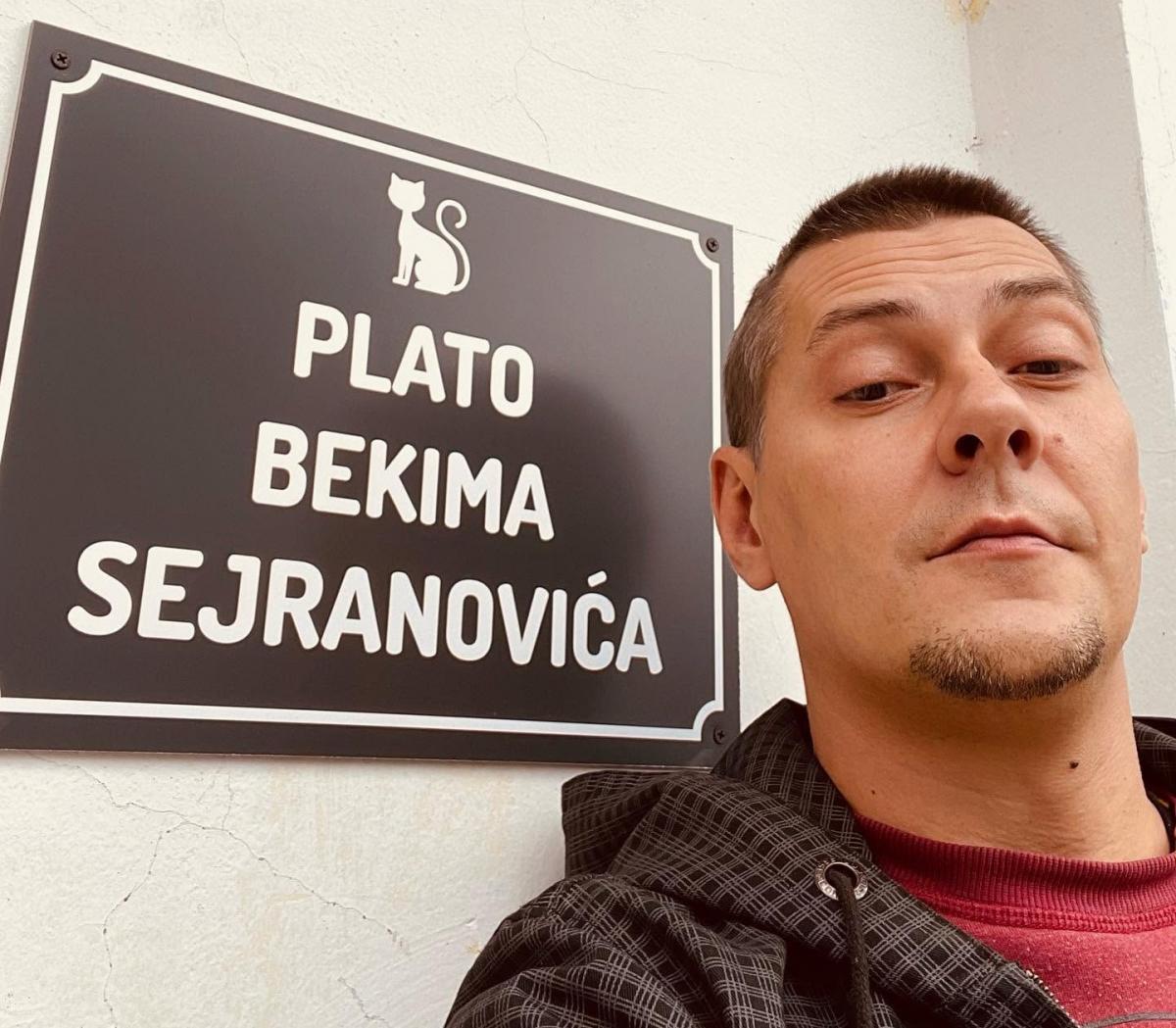
(Marčelo / Facebook)
Some would say: "You also hijacked the walls." It’s not untrue that murals were often painted without permits, but it was street art of bright colours. A continuous exhibition of creativity. The decoration of the city, which gave it a modern look, says: we are part of the world. There was a code: you mustn’t cross someone else's graffiti. Also, do not go on the wall until you are good enough. Even the most self-centered amateur was aware that there was a criterion, that you couldn’t just take up space next to the art greats with anything, because it would be too obvious that you were not up to par. And those "graffiti in the narrow sense", sentences written with spray paint, had an aphoristic or "punchline" note, to the point that some became eternal quotes. And then everything changed. Not with a sharp cut, but imperceptibly, by the principle of boiling a frog - the way everything else in people was boiled.
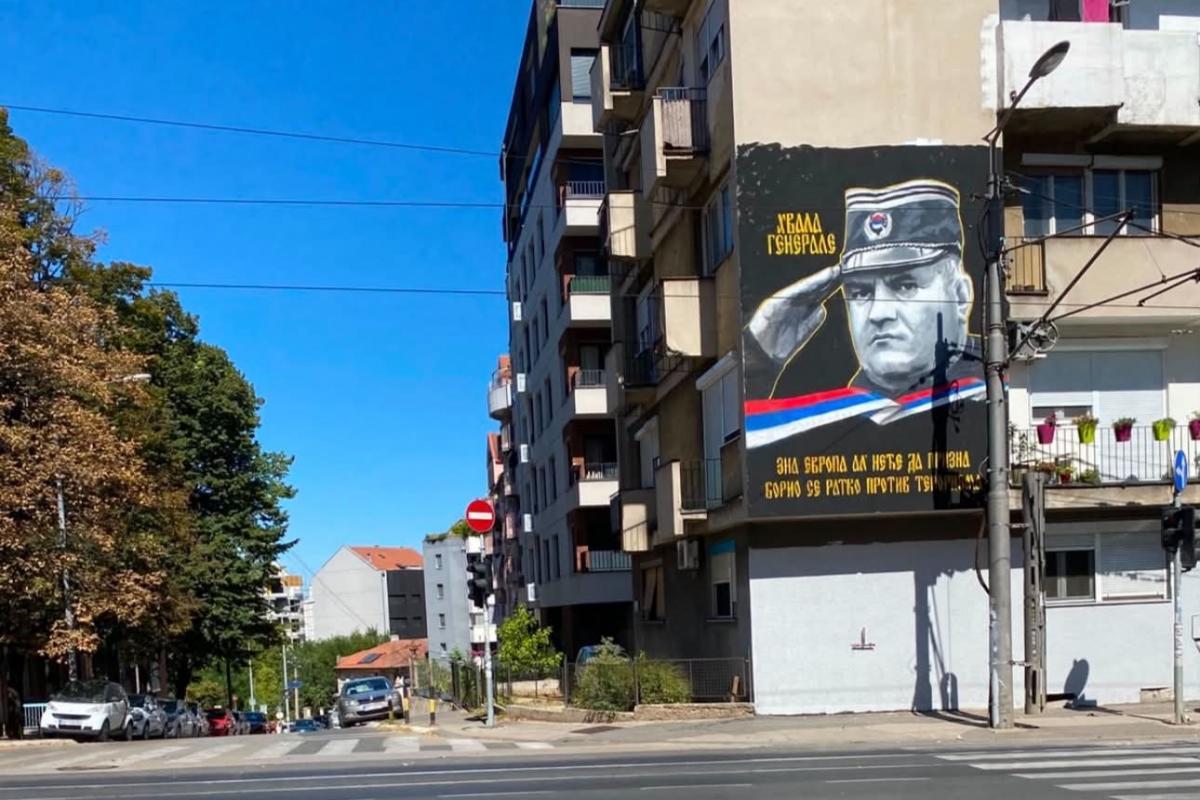
On the one hand, murals in Belgrade have become "obituaries" en masse. Black and white images of people who are no longer there. There’s nothing to complain about aesthetically, they are mostly very well done, but they are painful - and infinitely sad. They give the impression of a place where death is dominant. On the other hand, cities have been bombarded with stencils depicting war criminals, with the inevitable slogan "Mladic the hero". A large mural depicting a convicted general, as those who tried to throw eggs at him and paint over him have experienced firsthand, has bodyguards and guards, ready to remove you from the scene, if not beat you up. The cry "When the army returns to Kosovo..." is found at every turn, sometimes made with effort, but most often sloppily and amateurishly. As for the "graffiti in the narrow sense", it’s all just regime slogans, like "FCK BLK" ("fuck the blockaders"), "Rector to prison" (meaning the rector of the University of Belgrade), and inevitably "Serbia wins". Over whom, exactly? This time, it’s not the cross-border "enemies", but domestic ones: as current research suggests – half of its own citizens.
This is what a sad postcard from these parts looks like today; walking through its 3D version it creates the impression of savage mockery, in the eyes of a tourist, while for local students it offers the feeling that we are actually in occupied territory in our own country: if you disagree with the narrative, the walls openly threaten you. And a series of experiences, immortalized by horrifying headlines in the news, show that these are, by no account, empty threats.
Frankie: As someone who’s been involved in graffiti since the nineties and comes from that scene, I see it like this: as you said, in the beginning, we were the ones who hijacked the walls. When drawing graffiti, we weren't thinking about a political message so much as it was a rebellion that said: I won't let the law dictate where I draw my art. There were also fellow punks with their slogans, such as "fighting for peace sounds like f***ing for virginity". For them, the message and humor were more important, while we paid more attention to the aesthetics of the letters. That struggle was also directed towards corporations. Today, we unquestioningly accept advertisements on buses, trams and trains, and that form of advertising was actually copied by corporations from the graffiti artists of the eighties. There are, of course, also billboards: they cover huge sections of facades, which would look better with murals. Just one example from the West: for an apartment in a building where a mural is painted, a higher rent is demanded, because the building with the artwork gains additional value. That's how people see wall art there, and how much they don't appreciate it here. So today we are fighting on two fronts.
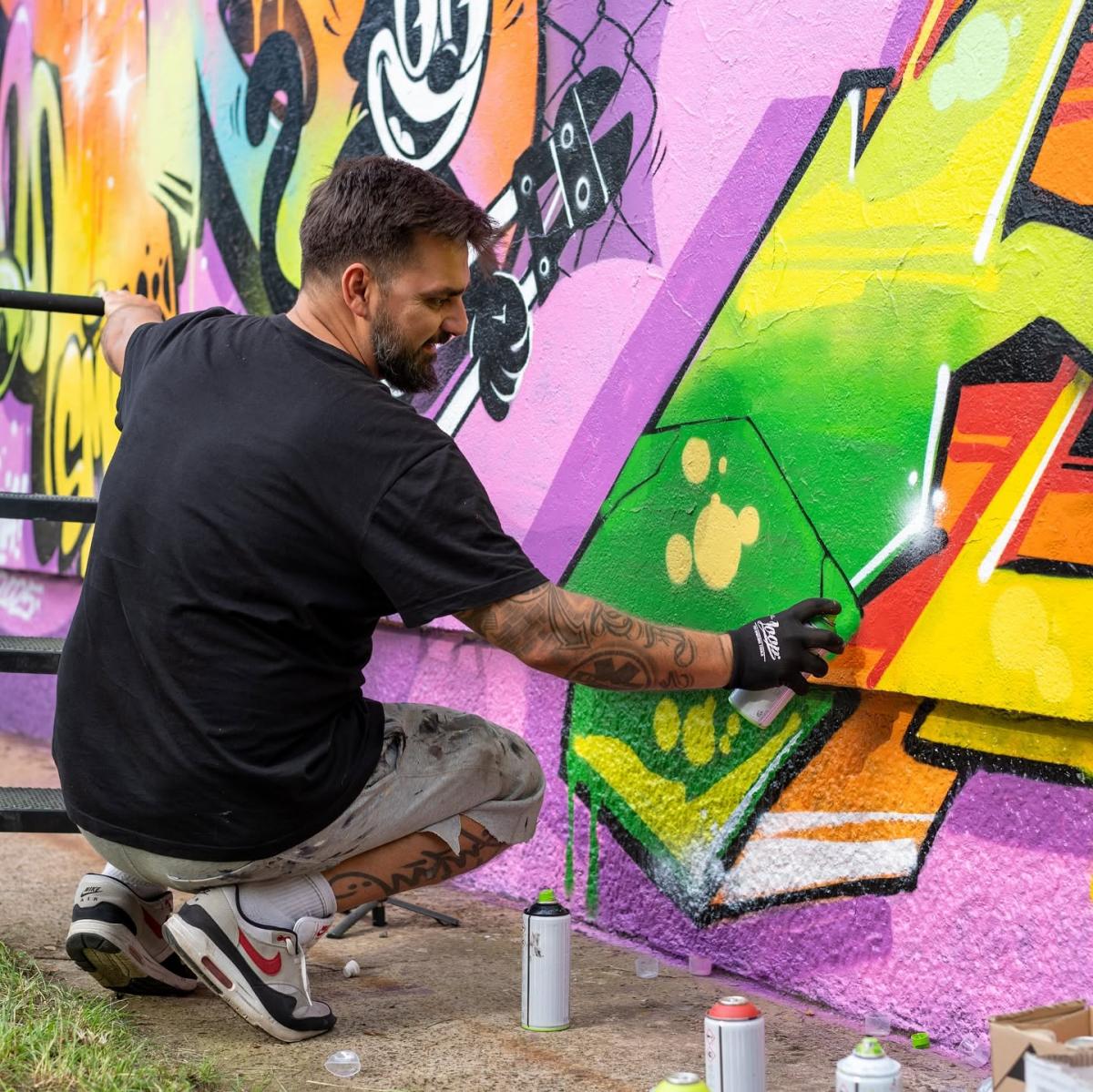
When it comes to nationalist graffiti, which often depicts war criminals, we both have the same opinion. As a cartoonist, I notice things like that right away and it tells me that I'm not welcome. Maybe I'm a bit jaded in the Balkans, so I can tolerate fan graffiti to some extent and even see a dose of art in it, if it's painted with taste - and if it doesn't contain nationalist and racist messages. This is where the rapper in me awakens, so I can classify it as some kind of local representation. I believe that there are normal guys among the fans; if we label them all as nationalists, we lose interlocutors and space for change, but it doesn't mean that other people have the same threshold of tolerance. I remember my first visit to Split and when I saw those huge murals for Hajduk. I was amazed by how many of them there are and how well they were done. These works dictate the atmosphere of the city and you can clearly see where you've come from. Most of them didn't have any nationalist messages, but a Serb from Knin probably sees it differently.
From my perspective, our walls haven't been hijacked yet. We’ll lose them when we stop fighting for them and when we stop drawing. It’s clear that an individual is not as strong as an organized group, but it’s important that we do our part. Sometimes it seems like a drop in the ocean, but through my communication with the kids I see that it has a bigger impact than we think.
Evil has space on the wall, the victim has no space for a monument
Marčelo: When evil became part of urban decoration, we got a phenomenon that can be characterized as the "muralization of hate."
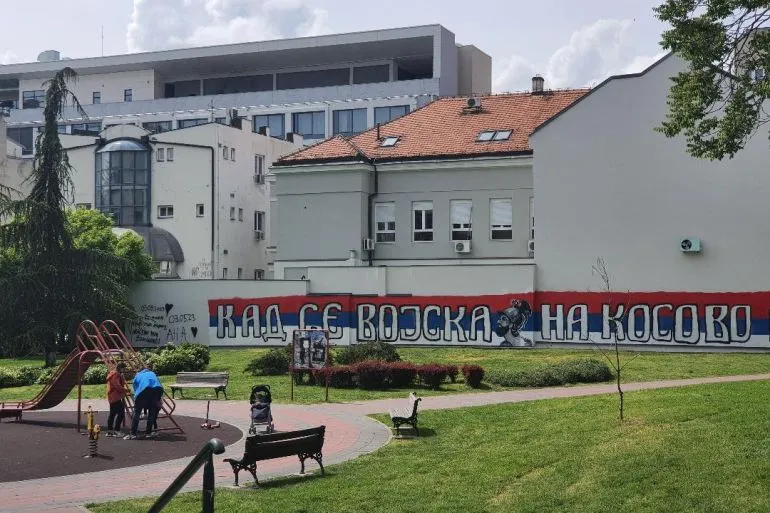
(Al Jazeera Balkans / Archive)
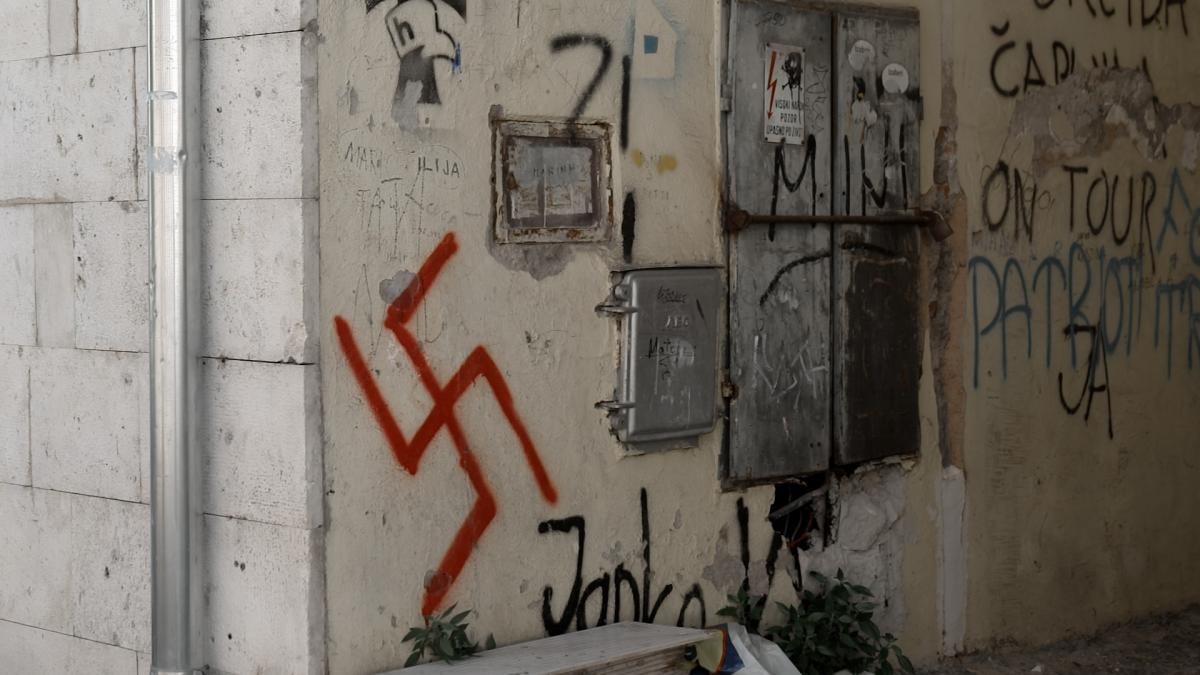
However, the "muralization of hate", as in every Orwellian substitution of theses, is for its ideologists the muralization of love. Nationalism as the only legitimate form of patriotism (terms that, if not before, certainly after the Second World War, are not synonymous) represents the essential backbone of what all political elites in ex-YU propagate, but in Serbia it has been brought to the utmost logical absurdity: the same people who in no way recognize the genocide in Srebrenica and consider it the most offensive slander that the world attaches to us because it hates us - write the ostensibly elegiac "When the army returns to Kosovo...", while it’s clearly understood what the army would do if it could actually return, and what kind of general-heroes that undertaking would produce. It would be solidly disastrous if a victorious power were to send such a message, but when you consider that this is a country that has not won a single war since the end of the last century, the thing sounds like the self-destructive ravings of a madman. Because let's be clear, this is not the same as the sentiment towards Kosovo, which is very much alive in all of us: our sore point is one thing, and wishing for a new armed conflict is something else entirely. It's a rough comparison, but: if they're not crazy, those who suffer deeply for their former relationships/marriages don't think that the matter is resolved by going on a murderous and suicidal mission with a gun to bring back someone who doesn't want it; when people come together, they think about how to best protect their children, and in this metaphor, children are the people. However, when the gun narrative has mass support and the regime stands behind it - and especially: if it’s known that the regime is not just the same kind of people as in the nineties, but the same people by name - we have at least two problems. First, the implicit malice towards others as a default factor in such minds, how is it possible to be so mercilessly mean towards your own people and incite them to death once again? And secondly, which is even more frightening: how is it possible that anyone, after everything we've been through, would fall for the absolutely identical tricks and schemes that have brought us so much grief, which they are being sold by the same people?
Here we should keep in mind another important fact: in its endless machinations, which make every move painfully transparent, the government wants the impression that this muralization is the authentic voice of the citizens, "it has nothing to do with us, the people feel that way". Who is this farce intended for when it’s blatantly clear who is directing and implementing it? There were instances where the police protected the defacers of the walls while they carried out their plan. In a company that does construction work for the state, the head of the construction site was suspended because he wanted to remove a mural of this kind. In 2026, in a capital with cameras on every corner, no one has been arrested for vandalism - which, by the way, has reached the level of writing disgusting messages with paint over the bark of an entire row of trees in a park, not to mention glass and concrete. Stevan Filipović, a film director and university professor, was recently beaten up by vandals in the city center in front of 15 witnesses because he was filming them desecrating a building with their slogans that is otherwise a cultural monument. This confirms impunity is not a hope and assumption of the perpetrators, but a guarantee. And to make it even more horrifying, there are not even people who, encouraged by the knowledge that there will be no consequences, do it out of their own impulse / conviction. Even the birds in the trees here know that nothing is done for the ruling party for free, and that no ideology, not even the most evil one, holds it (the party) together; it is a mere interest group.
(Detektor)
Frenkie: When it comes to marking the sites of suffering and erecting monuments to victims, the main responsibility also lies with the authorities. They are the ones who adopt policies and laws and they are the ones who issue permits for such things. A law banning genocide denial has been imposed in Bosnia and I think that it’s already yielding results. If a Balkaner can’t learn through dialogue, then maybe he’ll learn when you slap him over the wrist. Every July 11th I hope that we’ll start a new chapter, but unfortunately that doesn’t happen. First of all, because the Serb political leadership refuses to accept the court verdicts and utter that most difficult word – genocide. With such a policy, they only prolong the agony of their citizens, victims, and the entire region. We have court verdicts, the military and political leadership is in prison, but that reality is still not accepted. So, every July, we both have to go through painful discussions and arguments over and over again, and this creates an atmosphere in which a writer who tries to do something about this issue is attacked. This same atmosphere allows kids to draw their nationalist murals and slogans, because they know they’ll get away with it. We in Bosnia suffer a lot from Belgrade's attitude and I think that if there were a change in policy in Belgrade, Bosnia would be better off too. Serbia could have overtaken all of us in the region a long time ago, if only it had changed its policy on Srebrenica and Kosovo. But politicians refuse to do so, and that's why the country is stagnating. So they are holding us hostage, too.
I honestly don't know how the mothers of Srebrenica feel when they see the mural of Mladic. They have lost so much, and I think their wounds are so deep that we cannot even fathom their pain. They met part of the justice with the arrests and judgments in The Hague, and I believe that they also expected that we’d heal faster. In addition to the fact that these murals send a message of hatred and remind us of war traumas, they’re a sign of the defeat of our society.
(Detektor)
Marčelo: The funeral of the convicted general, deliberately held halfway between private and public, and the huge number of attendees, shows one thing: that the point of the controversy was never about the qualification of the crime, about what it’s exactly called – but that those challenging the verdict don’t actually think that it was a crime at all. This is a civilizational catastrophe in itself, and it’s “helped” by another: the Hague Tribunal added fuel to the fire by failing to prove the guilt of several key names for crimes against Serbs. Back to the topic, I don’t want this to sound like some kind of bizarre consolation, but victims are no longer denied solely on ethnic grounds. Reason has evolved, that is, it has reached its essence. I’ll explain.
In a country built by perpetual warmongers, raising the issue of victims is not yet prohibited by law, but in practice it is – as you mentioned, writer and activist Vladimir Arsenijević was beaten up (by a group of minors) for trying to pay tribute to the victims of Srebrenica in a public place this year; the punching and kicking was so casual that they even went so far as to write the number of Serbian victims of the war next to it (as if Vlajsin's or anyone else's gesture of compassion for others automatically means negating Serb victims). However, when we deal with the victims of the canopy collapse or Oliver Ivanovic – who are undoubtedly victims on our side – they tell us that we are anti-Serbs and ustasha. Which is to say, in this division of victims into "ours" and "others'", civilizationally repugnant per se, the reasoning is actually this: deny every victim for whom you, as a regime, are responsible. That’s what it’s about and that’s what it was about all along.
(Youth Initiative for Human Rights)
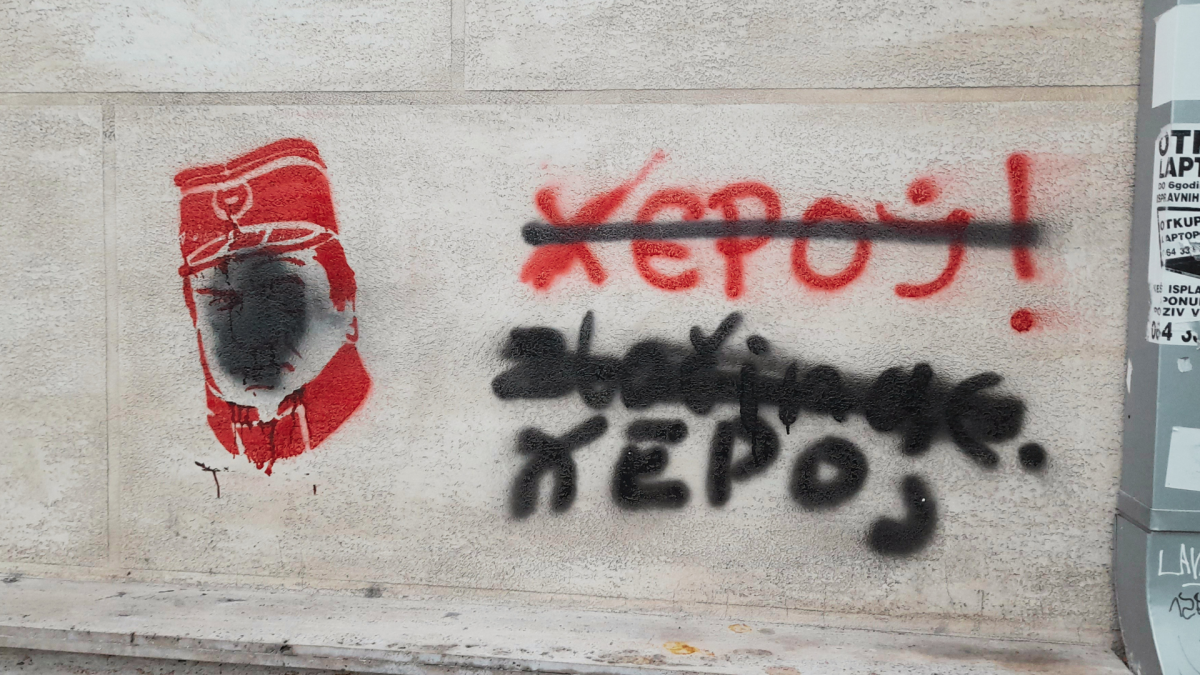
After all, it should always be repeated that Zoran Đinđić is also a victim of these people, of this “school of thought”. And the victim is not only himself, but also the memory of him: there is no graffiti “Đinđić the hero”. It’s not written on any wall. I know of only one mural with his image – at the Faculty of Philosophy – which has been defaced. With paint. Blood-red.
What history do we learn from walls?
Frenkie: Murals with the characters of criminals represent an attempt to distort history. The world is getting smaller and in this digital age it is very difficult to hide anything, let alone the truth. We can tell ourselves what we want, we can lie, write books and draw murals of criminals, but when we go out into the world, the whole story quickly falls apart, and you quickly realize that these quasi-heroes are criminals. Today, kids open ChatGPT for any nonsense, it's very easy to get information and expose a lie. Living in a parallel timeline is difficult, it means you can't watch anything else, you can't travel and you have to hang out only with your own group. I’m convinced that all these attempts to rewrite history will fail and that the truth will win in the end.
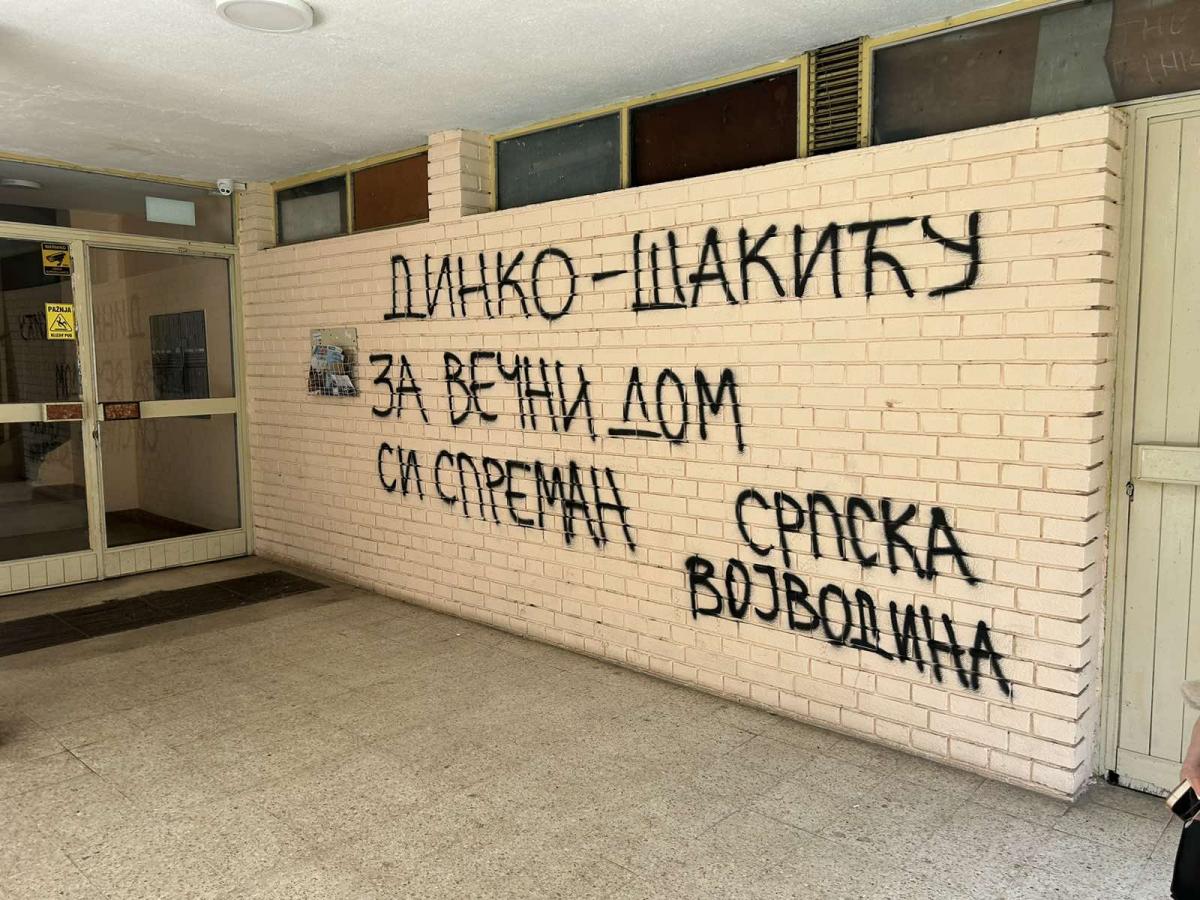
Marčelo: The problem you are talking about has two levels: the general, the social "mainstream" direction, and the individual one, where everyone for themselves either figures out the truth or they don’t. The first has been done for decades through propaganda, which is placed from the top and targets everyone, down to the ground floor and basement; domestic propagandists, however, are still living in the previous century, still believing that it’s enough to hog the television and the press to keep the entire nation in catatonia - but what about the internet and social networks? It’s not that this invention has escaped them, but they do not know what to do with it, and they’ll never know, because there is no solution, except to close the country in a bubble. Just look at these protests: they are led by youth. And although the entire region knows the whole story, I am not typing these lines without a lump in my throat even now , because images are running through my head that I thought I would never see in my lifetime. The time when they prepared food for each other in accordance with religious holidays or took turns "on guard duty" on those days is so touching to me, and I don't even declare myself a believer: it's about respect and appreciation. Or when, during the RTS blockade, a war veteran, looking at the picture of that harmony in front of him, said in his speech: "Once they convinced us that there are our children and other people's children, but that must never happen again". You hypnotize, day and night, via all the media, you deface all the walls, and still the awakening happens. And then, so omnipotent and powerless, you start beating people, because you have nothing else to do. And you just thought it was a good idea that, for example, a stencil of the said general be drawn even on the wall of the kindergarten in my street, between Donald Duck and Daisy Duck (yes, really!). I would say that it was an attempt at indoctrination from a young age, if I weren't convinced that it wasn't even that, but simply the extreme point of small-mindedness. The atrophy of a politics whose dead end is still not seen by only the most naive and most intoxicated. And if we persevere in the fight, the hope is that the story will change in the opposite direction from propaganda: from the bottom up. Some new political elites will not easily fall for old tricks, because populism boils down to telling the people what they want to hear – and these stories will become less and less popular. The images on the walls are matched by the living images from the protests. The only history that will be learned from the walls will be the history of the dishonour of various Seseljoids, sowers of misfortune who emerged from every national calamity richer and more eager to poison even more. One day, it will be known who was really a traitor and satirist of the nation here, and who truly loved their people and meant only good for them. Then we will no longer confuse the word nationalist with the word patriot.
(Autonomija)
Anyway, it's devastating that this won't reach the oldest people. Most of them, like in the nineties, will vote against their children and grandchildren, not realizing anything that has been wrong since then. And while we question everything here, and even talk about walls, in some situations it seems like we're talking to walls.
Is there enough paint to bring back the colorful facades
Frankie: I’d like to tell you about an interesting situation that I experienced recently. I was driving towards Krajina to a concert and decided to stop in Mrkonjić Grad to see the famous house where the ZAVNOBiH session was held. Descending into the city, I came across a huge retaining wall that a group of kids were painting that very day. At first, I couldn't believe it and I was delighted: who would have thought that in a small town like Mrkonjić Grad, kids are making a mural. However, as I got closer, the euphoria subsided. The kids were drawing a peasant in a field, on the wall. I expected them to do some graffiti or at least something more abstract, a modern mural. However, I was greeted by a peasant as if from an old communist brochure. I expected to see something new, modern, something that would make me grow, because that’s the task of new generations - to show us older people how backward we are, but I saw the past and conservatism. I suppose it could have been worse, they could have depicted a war criminal or a Chetnik, which would have been even more devastating in Mrkonjić Grad. The peasant turned out to be a good mural, after all. But this scene perfectly illustrates the state of mind of the new generations. Instead of drawing the future, spaceships, some floating city and flying cars, they draw a peasant in a field?! You don't have to indoctrinate them anymore - the job’s done.
(Detektor)
Marčelo: Now, to the delight of all the haters, I'll sound like a communist if I tell you that I had a smile on my face while reading this, although I understand your point. But really, there's something healthy about it for me, not just romantic: as my friend Dejan Ognjanović would say in one of his novels: "the deader the villages, the more the taverns insist on the prefix ethno;" while here in Serbia the president talks about flying cars and robots, I would much rather save the villages and that peasant in the field. You wouldn't believe how many people around me actually dream of retreating to such a life from this city hubbub, and there are fertile lands galore. That's why I like it that some kids don't see it as outdated, but as something beautiful - because what sounds old-fashioned is not always the same as narrow-mindedness, just as futurism is not necessarily an image of progress (just look at contemporary pop culture's obsession with the post-apocalypse). After all, as you said, as long as they don't muralize villains and scribble nonsense for pocket money from the ruling parties.
As a positive example, here in our country, Pijanista (a Serbian graffiti artist) is the first thing that comes to mind: the diversity of his street art and the splendor of his talent is an excellent inspiration for younger people. Not only does it show them what can be done creatively with walls (and not only walls) – but at the same time the kids can also see all the rawness of this other current, the absence of imagination and skill, vanity, in short: gibberish. And if the supporters of that trend would say: "Maybe it's not aesthetics on our side, but it's the truth", their ideologues, back in their mansions, would be the first to laugh.
(Frenkie / Facebook)
Frenkie: Despite everything, I am also an optimist – and I would also end with a few positive examples, because there are people who are doing really good work. For example: Mostar Street Art, Fasada festival in Sarajevo, Unity in Tuzla, Duk festival in Čačak, xSTatic in Split and many others. There are even positive examples among fans. For example, I find the murals of Grobarski trash romantizam brilliant. They clearly send a different and inclusive message. There are many such examples in the world, and as we can see, there are also some in our country. So, there are colours and artists. It’s important to support such festivals.
At the beginning of the conversation, I mentioned that graffiti started as a rebellion and that it also influenced marketing. Previously, this form of advertising was copied by corporations, and today the government uses it to present the false opinion of the people. War on the walls has been going on ever since, only today is battle harder, because the government has realized how important this public space is and is fighting to keep it for themselves. They have more resources, but we have never been driven by money but by ideas, and ideas have always been stronger than leaders and systems.
Marčelo: That's right. And although we can't erase the past, it's important that it doesn't continue to scare us.
The article was created within the project “Presented / Digital Majority – Cross-Border Reporting”, which is implemented by the Foundation for the Development of Media and Civil Society “Mediacentar” in cooperation with the organization Pro Peace in Bosnia and Herzegovina.
