




Journalism Under Blackout: Witnesses of Evil in the Crosshairs
Journalism Under Blackout: Witnesses of Evil in the Crosshairs
How Russia’s war against Ukraine has turned journalists into targets and why Ukrainian reporters keep working in places where silence would mean surrendering to fear
photo: Anna Klochko
I am writing down my thoughts in a café in my hometown, Sumy. I barely managed to find a place with a generator powerful enough to let me sit down and charge my phone and laptop. For the third day, almost the entire city has been living without electricity and with it, without stable phone service, internet or water supply.
In Sumy, work often happens under the constant sound of air-raid sirens, which can last 18 or 20 hours a day, and under the sound of explosions. Sometimes I must step away from the window and move into the corridor when another Russian drone passes outside, or when Ukrainian machine-gunners try to shoot it down.
Working in such conditions is difficult, but necessary. Because there are people working in far harder ones: soldiers who have been defending the country without pause for almost four and a half years, and energy workers who, in 30-degree heat and under the threat of new attacks, are repairing equipment that has already been damaged many times over. Russia is systematically destroying Ukraine’s energy system – especially in border regions and major cities.
Last winter, I lived and worked in Kyiv, where, during freezing temperatures, people had electricity for only a few hours a day for weeks and sometimes went several days without it at all. On nights of mass Russian attacks on the capital, sleep was often impossible: the strikes could last until morning, and when ballistic missiles hit in my district, the blast wave sometimes made the doors in my apartment slam. My laptop would die within an hour; a few hours later, so would the charging station and all the power banks. The only places that saved us were small neighborhood cafés running on gasoline generators, where people from the entire district came to charge their devices, warm up, work, or simply be around others.
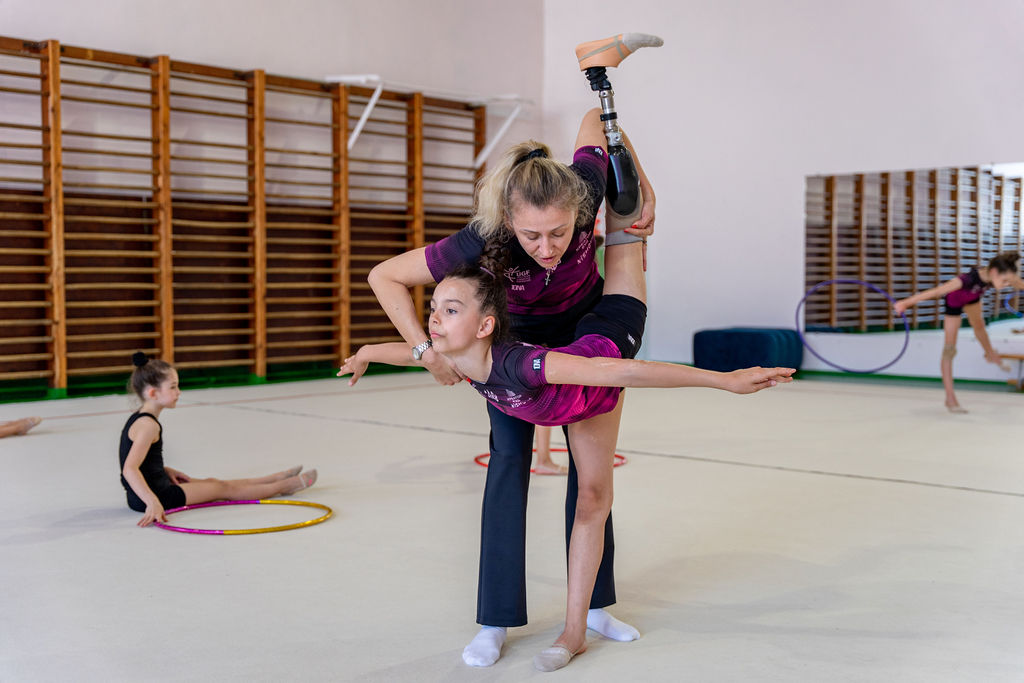
But all these difficulties fade beside the stories of the people I write about. Besides elderly residents of Kyiv high-rises who spend the winter on upper floors without electricity, heat or working elevators. Beside young gymnast Oleksandra Paskal, who lost her leg after a Russian missile strike in Odesa region yet returned to sport and now wins international competitions. Beside my neighbors from the top floor, who fled a border town for the regional center, trying to protect their four children from the war, only to lose their eldest son last year: he was 17 when he was killed in a strike on central Sumy while on his way to take entrance exams at a machine-building college. Besides the children of the border region, who are now in their fifth year of studying only online and know their classmates mostly by avatars on Zoom.
What follows is only a fragment of what I have witnessed over these years: stories of journalists, colleagues and civilians living and working in a war where testimony itself has become dangerous. These stories must be told.
When PRESS Becomes a Target
Back in February 2023, when a camera operator and I travelled to the border area of Sumy region in northeastern Ukraine to film a story about agricultural enterprises destroyed by Russian forces at the beginning of the full-scale invasion, local farmers advised me not to wear my bulletproof vest or helmet marked PRESS.
“Don’t draw the enemy’s attention,” they told me. “They are five to ten kilometers from here. From their drones, they can see everything that happens here.”
At the time, it sounded like the caution of people who knew their land too well and lived too close to the Russian border. In reality, it was the beginning of a new reality: the era of mass-produced drones and FPV aircraft that have changed not only the rules of modern warfare, but also the rules for journalists covering it.
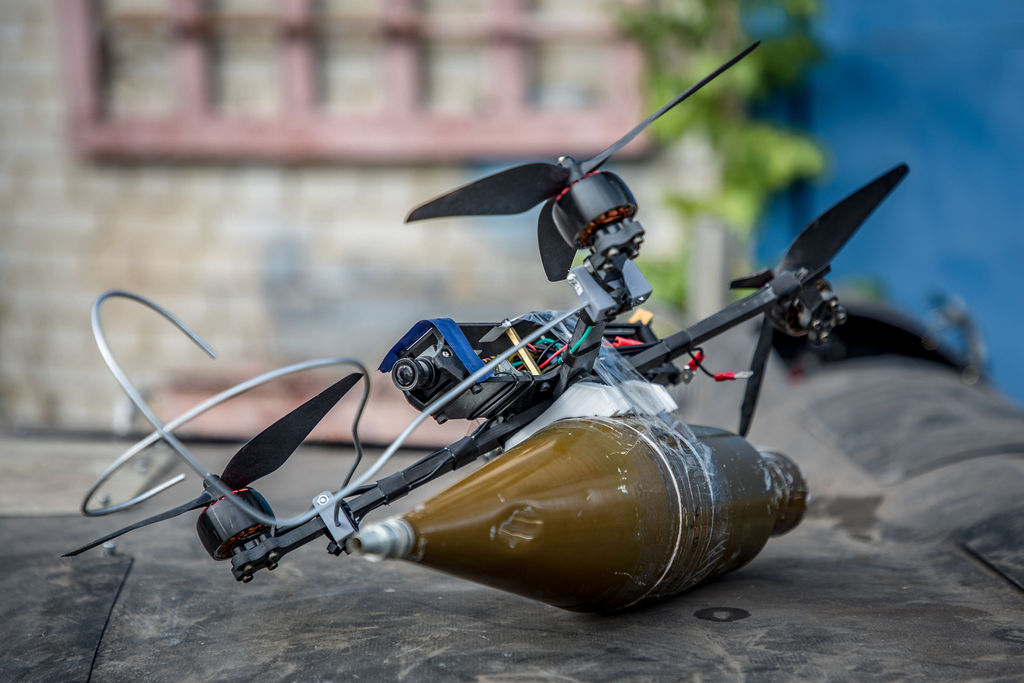
(FPV drones, or “first-person view” drones, are small drones guided by an operator through a live camera feed. In Russia’s war against Ukraine, they have evolved from civilian-style devices into one of the most widespread and deadly weapons – cheap, precise and often used to target individual vehicles or people.)
In war, the word PRESS always offered only fragile protection. In Ukraine, it is increasingly seen not as a safeguard, but as a target. For Russian forces, a journalist is not a neutral observer, but a witness. And in this war, witnesses are being forced into silence.
The phrase “human safari” is painfully familiar to Bosnians. In Ukraine, it has acquired a new technological dimension. Alongside mass strikes with missiles, aerial bombs and kamikaze drones, another threat has emerged: the individual hunting of human beings in what is known as the kill zone – an area where a Russian drone operator can see a single figure on a screen and choose it as a target. It may be a soldier, an evacuation vehicle, a bread delivery van, an elderly woman in her garden, a civilian car – or a journalist.
(As of 6 July 2026, since the start of Russia’s full-scale invasion of Ukraine, at least 153 media workers had been killed. According to verified data from the National Union of Journalists of Ukraine and the International Federation of Journalists, 21 of them were journalists killed while performing their professional duties; 10 were media workers killed as civilian victims; and another 122 were media professionals who, after joining Ukraine’s Defense Forces, were killed while serving on the front lines and defending the country.)
A Constant Calculation of Risk
That time, in 2023, I listened to the farmers and worked in civilian clothes. I kept looking up at the sky and listening. At the same time, I had to watch the ground and follow the farmer’s footsteps exactly: during the two months this part of Sumy region was under Russian occupation in the spring of 2022, Russian troops had left mines behind.
Since then, this reality has become even more complex. Along the active front line, which stretches for roughly 1,200 kilometers across Ukraine, danger is no longer limited to artillery or missiles. FPV drones, mines, munitions dropped from unmanned aircraft, and so-called “waiting drones” – devices hidden in bushes or in the ruins of buildings – have turned large areas into zones of constant risk. Ukraine’s land border with the Russian Federation is about 2,295 kilometers long, and even in places where active fighting is not taking place, proximity to Russia often means a daily threat.
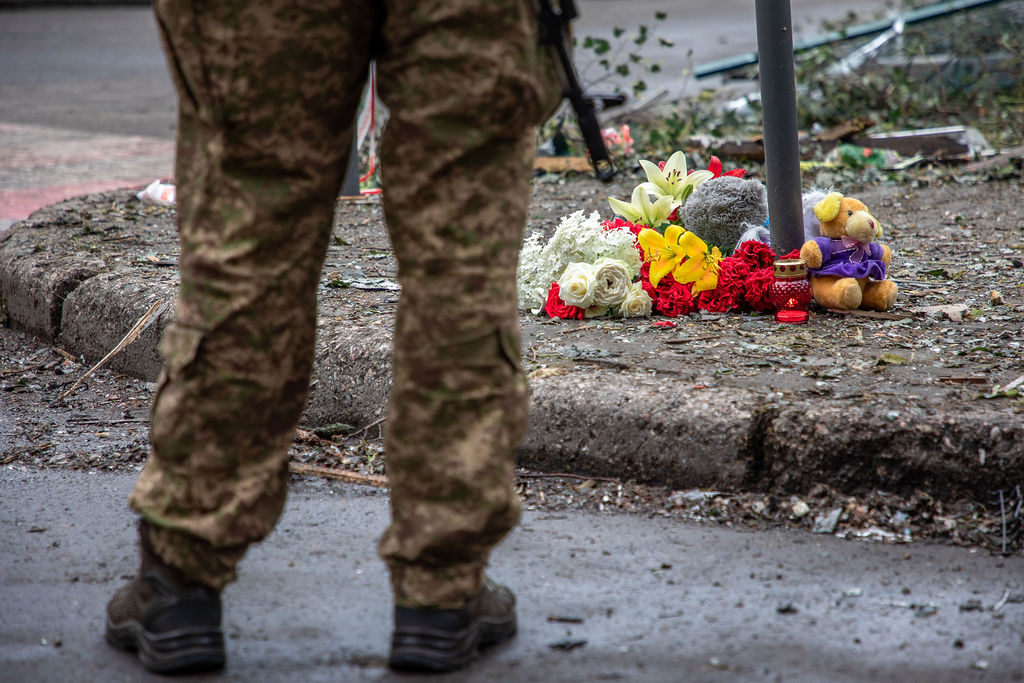
In Ukraine, journalism has become work inside a zone of constant risk assessment. Media access to areas of hostilities is regulated by an order of the Commander-in-Chief of the Armed Forces of Ukraine and divided into zones: in the “green” zone, accredited journalists may work independently; in the “yellow” zone, only accompanied by a press officer or another person designated by the military; in the “red” zone, media work is prohibited because the danger is too high. But even these rules do not change the essential reality: a journalist at war must think not only about the subject, the frame, the question or the deadline, but also about the route, the sky overhead, the tree line by the road, the sound of a drone, the distance to shelter and whether their presence may create additional danger for the people around them.
When Colleagues Are Targeted
I work not only with words: I am also a member of the Ukrainian Association of Professional Photographers (UAPP). In October 2025, the association’s internal chat became a place of anxious waiting. It was there that many of us first learned that Heorhii Ivanchenko, a Ukrainian photojournalist, had been seriously wounded while working in Donetsk region. His colleague and friend, the French photojournalist Antoni Lallican, was killed. Their vehicle, clearly and prominently marked PRESS, had been hit in a targeted Russian FPV drone strike.
The news was first shared by Heorhii’s friend, Olha Kovalova – a documentary photographer, curator and project manager at UAPP, who herself had been wounded while working near the front a year earlier. She suffered shrapnel injuries whose consequences still affect the use of her right arm. We were all worried for Heorhii and prayed that doctors would be able to save his life. They did. But they could not save his leg.
Less than three weeks later, on 23 October 2025, two more Ukrainian media workers were killed in Kramatorsk: Olena Hubanova, a war correspondent for the FREEDOM television channel, and camera operator Yevhen Karmazin. A Russian drone attacked their vehicle while they were working at the site of an earlier strike.
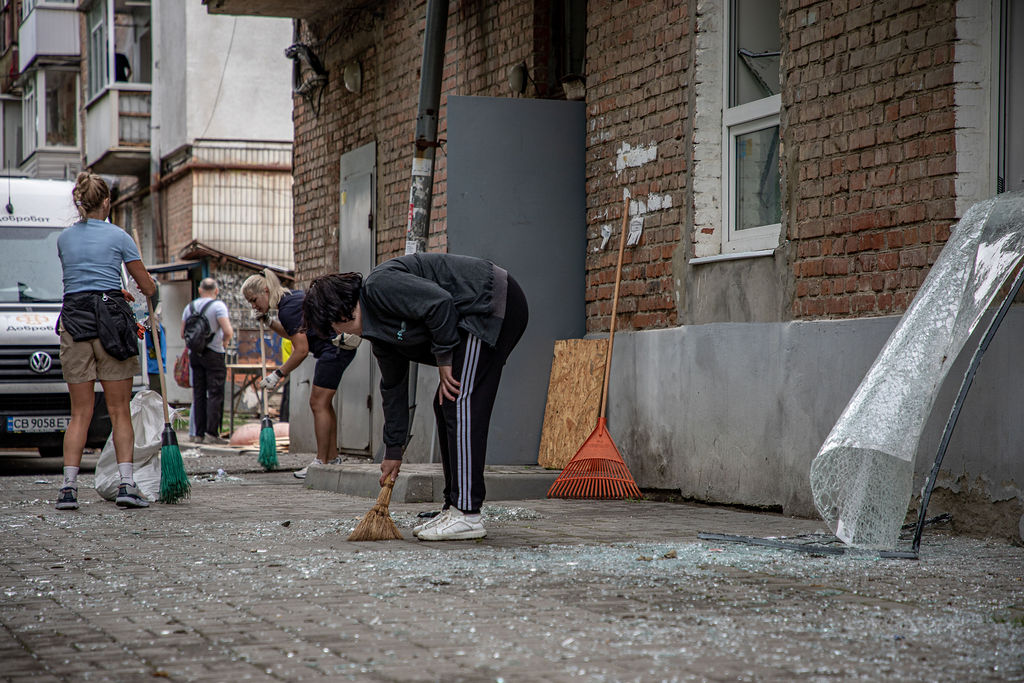
After cases like these, many journalists began refusing assignments too close to the front line. Others became even more cautious, assessing routes, escorts, time on location, and the risk of a follow-up strike with greater care. But most continue to work nonetheless because if journalists stop going to places where the danger is greatest, those places may simply disappear from the world’s view.
The Stories That Remain
Olena Maksymenko, a Ukrainian freelance journalist and writer, continues to travel along almost the entire front line – often to Donetsk region, but not only there. She works from her own car. When I asked why she keeps returning to the places where the danger is greatest, she did not reach for grand words.
“The impossibility of doing otherwise. They need to be as useful as possible. If I am not in the army, then I am nearby. I do what I know how to do best, and that is my contribution.”
For a war reporter, the trust of the military is one of the main conditions for working.
“Press officers may change. But if you are known as a friend of the brigade, they will still work with you,” Maksymenko says.
For Maksymenko, reporting from the war is a form of testimony. It allows her to preserve the stories of people whose lives might otherwise be reduced to numbers, brief news alerts or military updates.
“Some of the people I have written about are no longer alive. But their stories remain. And that is what gives this work meaning.”
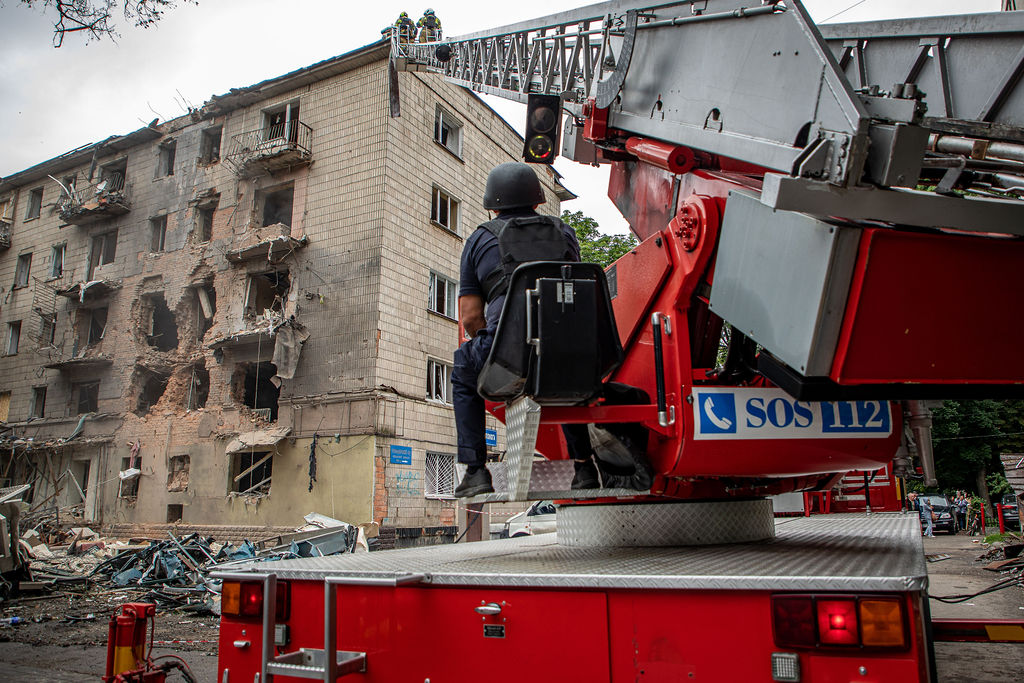
One of the most dangerous episodes happened in Mykolaiv, before the liberation of Kherson in November 2022. Maksymenko and a colleague entered an almost empty café and sat by the window – just as shelling began.
“We dropped to the floor. The window was blown out. The woman working there called us deeper inside. We hid, and then we saw a large gas cylinder nearby. All three of us immediately understood what would happen if it were hit.”
After the shelling, there were dead and wounded people in the street; her car had been damaged; her coffee and laptop were left under broken glass. Only later did they understand why the café had been empty: it was one of the most dangerous parts of the city.
Another episode came on the Pokrovsk axis – a strategically important sector in Donetsk region around the city of Pokrovsk, a key logistics hub and one of the gateways to the Ukrainian-held part of Donbas – in the autumn of 2025, while she was working with artillery soldiers of the 152nd Brigade. FPV drones were flying over the positions; nearby stood a damaged vehicle from an adjacent unit. When the journalists were supposed to be evacuated from the location in the dark, a Russian drone set that vehicle on fire.
“It burned like a giant torch, and in its light the guys were carrying heavy shells,” Maksymenko recalls.
Then came the night road to Kramatorsk, with poor navigation, darkness, and a burning truck by the roadside.
“And next to me was a 20-year-old photojournalist who was on the front for the first time. That feeling of responsibility weighed heavily on me.”
When War Comes to Your Own City
Alongside the experience of journalists who travel to the front line on assignment, there is another kind of experience: when the war comes to your own city.
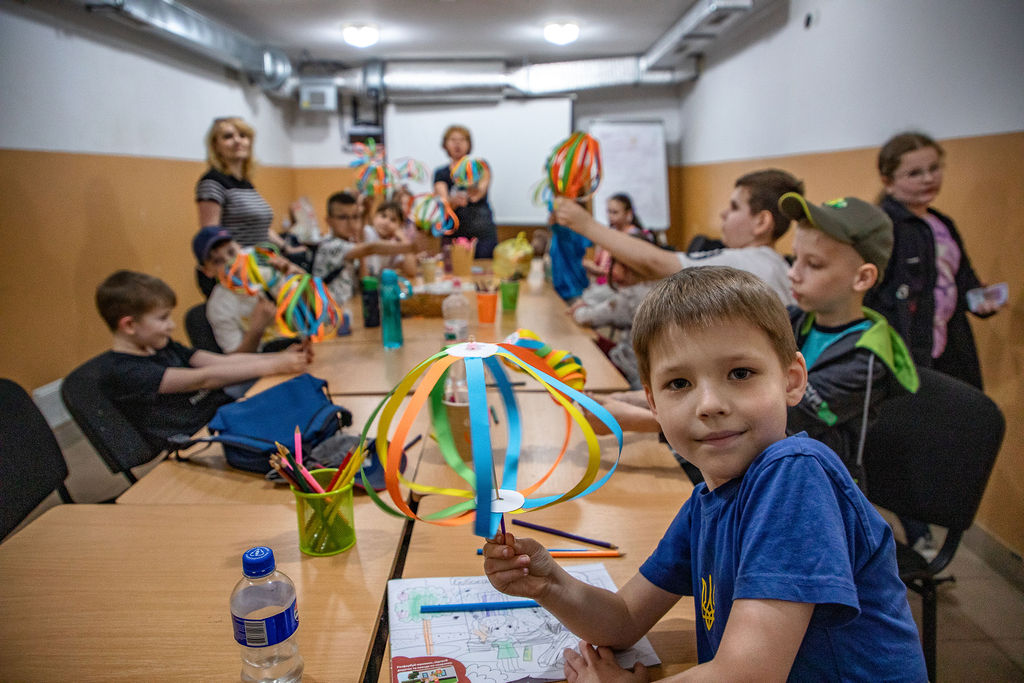
Iryna Kasianenko, a journalist with Suspilne Sumy, part of Ukraine’s public broadcaster, returned to work after maternity leave in the autumn of 2022. Her first trips to the sites of Russian strikes were extremely difficult: destroyed homes, people who had lost everything, wounded civilians being taken away from the scene.
“I could not switch off the shock and compassion,” she recalls.
Over time, Kasianenko says, she had to learn a kind of internal distancing.
“When you are working, you switch off those feelings. Otherwise, you simply cannot do the job. You must show the consequences of the strikes quickly, so the world can see what Russia is doing.”
But it is impossible to fully separate the profession from one’s own life when the story is unfolding in your own city. Kasianenko says that as a journalist she must work with a cool head, but as a resident of Sumy she sees familiar places disappear after strikes.
“When you are not working, when you are simply walking down the street and you know: there used to be a house here, and now it is gone – that is when you allow yourself to feel it,” she says.
She defines her task as a journalist simply: “We do not speculate on emotions. We document and show the world what Russia is doing.”
One of her most dangerous assignments came while working with the White Angel police unit in the border area of Sumy region. The crew was travelling to evacuate a mother and daughter from a village in the Velyka Pysarivka community, about 10 kilometers from the Russian border. Because of heavy Russian FPV drone activity, they waited for several hours for permission from the military. Then they entered the village at high speed.
“The closer you get to the village, the more burned-out cars you see by the roadside,” Kasianenko recalls. “Someone was driving too and never made it. The drones destroy everything they see.”
The evacuation was carried out quickly. But on the way back, the police officers received another task: to recover the bodies of two civilians killed by a Russian drone. The two had returned to their village for a few hours to cover shattered windows with plywood and try to protect what remained of their home.
It was after that assignment, Kasianenko says, that she understood what “the smell of death” meant. “You can no longer confuse it with anything else.”
Everything happened in open terrain, under the constant threat of another attack. The police officers had only minutes to act. After the group had left, the military reported that Russian FPV drones appeared at the same spot just a few minutes later.
The most frightening moment, Kasianenko says, was not the waiting itself, but the moment before they set out, when she saw the White Angel officers crossing themselves.
“That was when I thought: now, perhaps, it is time to be afraid.”
The Double-Tap attacks
One of the most cynical tactics used by Russian forces is the follow–up strike, often known as a “double-tap” attack. First, they hit a site. Then they wait 20 to 40 minutes, until rescuers, medics, police officers and journalists arrive. After that, they struck again – this time targeting those who came to rescue, help and document the consequences of the attack. Such strikes have taken many lives. Once, I witnessed this myself.
In September 2024, my military press accreditation, which allowed me to work at strike sites, was being renewed. That was when two Russian-launched Shahed drones hit a hospital building near my home. I saw them pass from my balcony. A few seconds later, the explosions came.
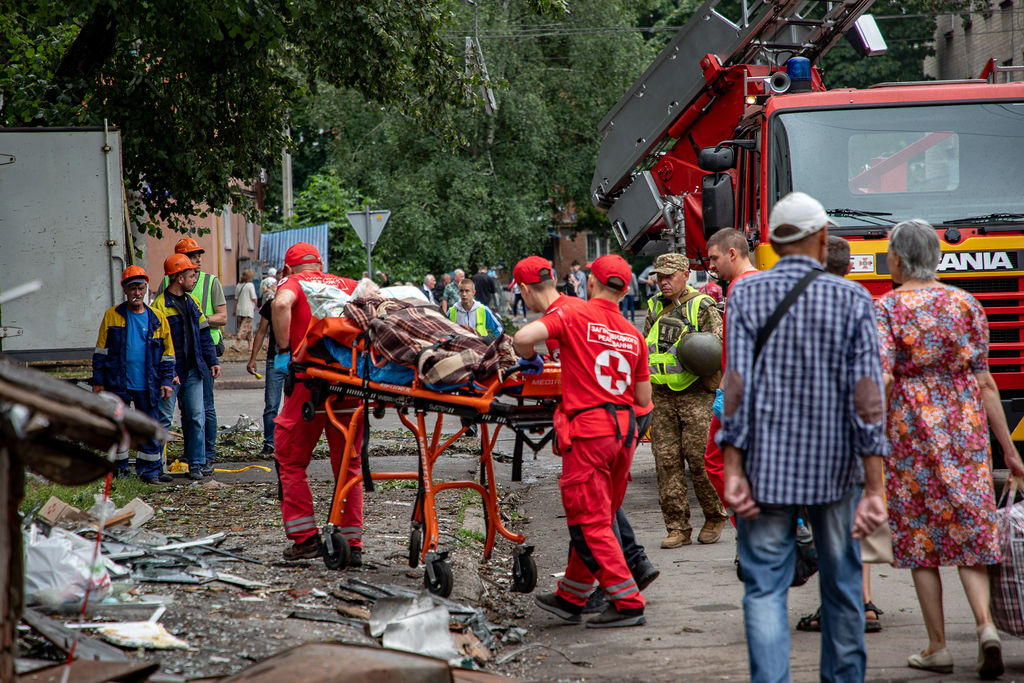
My editor called and asked me to take a photo report from the site of the attack, if the military would allow me to work without accreditation. Within five minutes, I was already near the hospital. Wounded people were being carried out of the building; medics were providing aid; firefighters were battling the flames; rescuers and military personnel were documenting the aftermath of the strike. Patients and hospital staff were running out of the smoke-filled building. I was trying to find someone in charge who could give me verbal permission to photograph.
There I met my friend and neighbor, Liliia, a neurologist, at the hospital. It was her day off, but like many people from the surrounding streets, she had run there to help. At that moment, the police warned: “Everyone move away. More Shaheds are coming.”
I understood that I had to go home: I still had no permission to photograph. Normally, I would have taken the short path past the hospital and the shops between the apartment blocks – a route I had walked hundreds of times. But this time I thought: if two drones had already hit the hospital, a third might strike the same place. So, I decided to take a longer route, behind the five-story buildings.
The third drone approached almost unnoticed. At the site of the previous strikes, people were shouting, emergency vehicles were working, and everything merged into one continuous noise. When the drone began its final approach, people opened fire at it, and only then did everyone around hear it. But there was almost no time to take cover.
The drone hit the place where people were still gathered: medics, firefighters, civilians. I was about 200 meters away, partly shielded by the buildings. When I ran back to the site a minute later, I saw Liliia against the smoke and flames. She was walking unsteadily, but she was alive. The blast wave had thrown her back; later, a large bruise would appear on her body. But she was lucky.
That day, ten people were killed. More than twenty others were wounded.
The Danger After Publication
There is another front of danger – not on the site of reporting, but after the work is done. In modern warfare, any photograph, video or even a short social media post can become a source of intelligence within minutes. A geolocation, the silhouette of a building, the direction of smoke, fragments of debris, road details or the nature of the damage – all of it can be analyzed and used to adjust to a subsequent strike. That is why Ukrainian journalists today must think not only about how to show the truth, but also about whether the publication itself could put someone at risk.
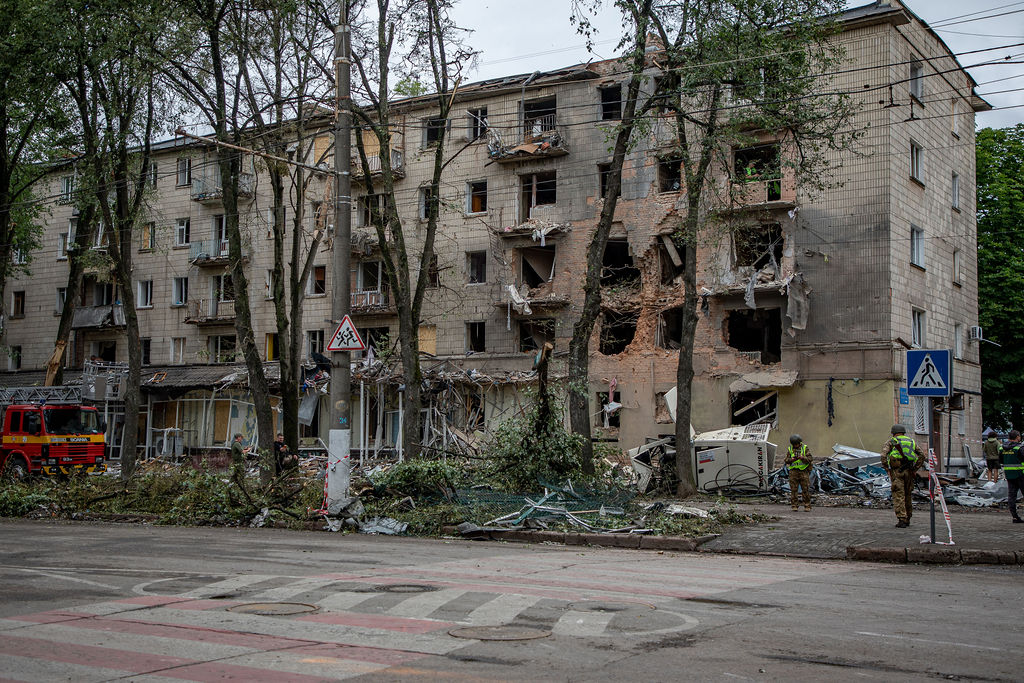
One of the most painful lessons of the first months of the full-scale invasion was the strike on Kyiv’s Retroville shopping mall in March 2022. After footage showing military equipment near the building appeared online, the site was destroyed by a Russian strike, killing people. Since then, Ukraine has imposed strict restrictions on publishing information about troop movements, air defense activity, military facilities, the consequences of strikes on critical infrastructure, and any details that could help the enemy assess the results of an attack. For a journalist, this means a constant choice between the need to bear witness and the duty to do no harm. Sometimes the most responsible decision is to leave a powerful image unpublished.
The risk, therefore, is not limited to the possibility that someone might accidentally see a photograph on social media. Russia systematically uses open sources for intelligence: media reports, Telegram channels, videos posted by eyewitnesses, geolocations, and details of landscapes, buildings or damage.This work is carried out not only by professional structures – the FSB, GRU and SVR, Russia’s domestic security service, military intelligence agency and foreign intelligence service – but also by private contractors and hacker groups, as well as networks of pro-Russian anonymous channels and “volunteers” who collect data on the movement of equipment, military facilities, infrastructure, Ukrainian soldiers, volunteers and activists. In this reality, every publication has an invisible second audience – not only readers, but also those who may use it for the next strike.
Accountability Under Fire
Yet wartime caution does not mean silence. Ukrainian journalists must think about information security, but they cannot forget another essential function: holding power accountable in the public interest. During war, this balance is especially difficult – not harming the defense effort, while also not allowing officials to hide mistakes, negligence or corruption behind the phrase “now is not the time.”
One of the greatest tragedies in my hometown took place on 13 April 2025, on Palm Sunday. At around 10:20 in the morning, as people were leaving churches with blessed willow branches, Russian forces struck the center of Sumy with ballistic missiles. Thirty-five people were killed, including two children, and more than 110 were wounded. Dozens of buildings – residential blocks, university facilities and historic structures – were damaged or destroyed.
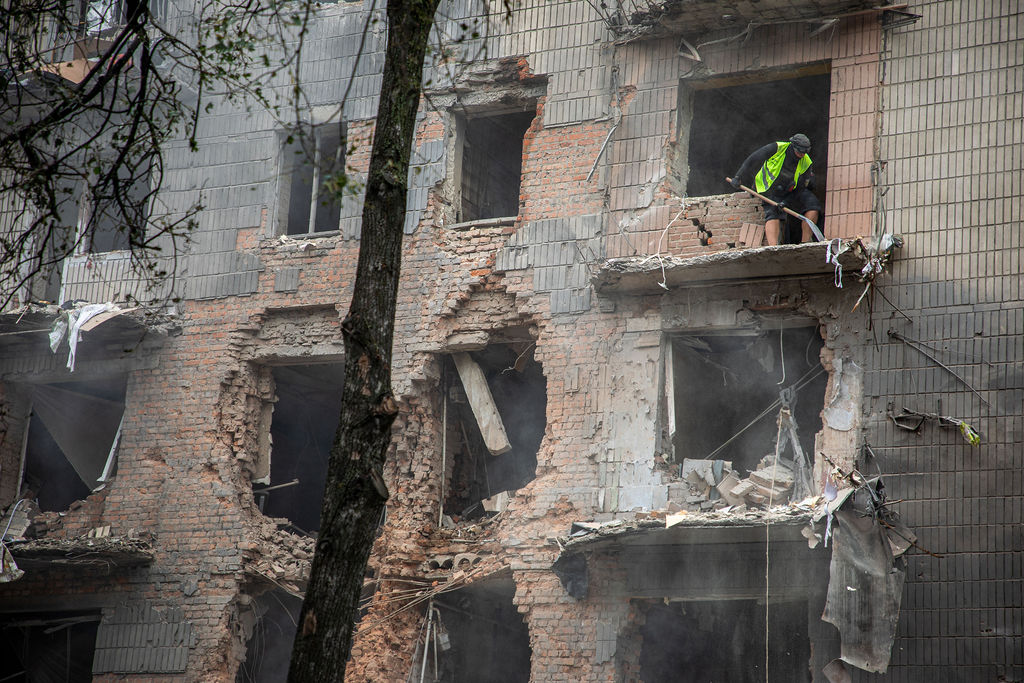
One of the missiles hit the congress center of Sumy State University. The second, according to Ukrainian authorities, carried a cluster warhead and struck a wide area nearby, including a university building and a bus that was passing by.
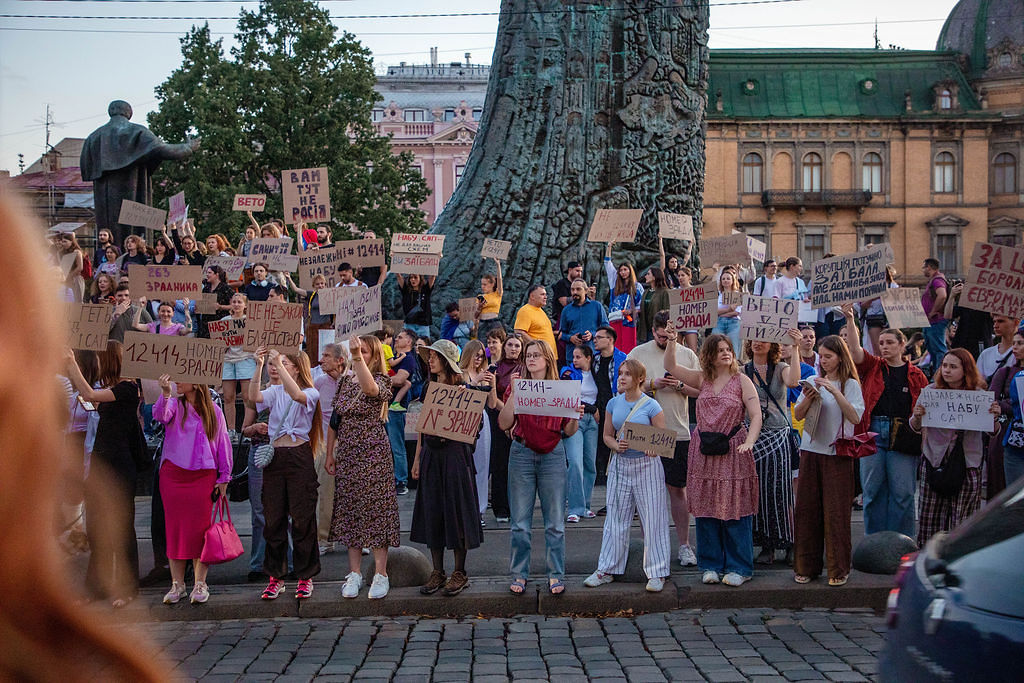
Almost immediately after the attack, people in the city began discussing whether an awards ceremony for military personnel might have been planned at the congress center. According to residents and journalists, information about the event had already been circulating before the tragedy on Telegram channels and in conversations around the city. Officials rejected accusations of responsibility, but for many people in Sumy a painful question remained: could such an event be held at all in a city located close to the front, in a place that outsiders may have known about?
The public was divided. Some said that Russia alone was to blame for firing missiles into the civilian center of the city. Others, without removing Russia’s primary responsibility, also demanded an honest conversation about possible negligence by Ukrainian officials. This was where the work of local journalists became especially important: they did not silence uncomfortable questions or reduce everything to the broader context of war.
Journalistic oversight of those in power during wartime is not work “against the state,” however much Russian propaganda would like to present it that way. On the contrary, it is worked to ensure that the state remains strong, responsible and democratic. Openness and accountability help prevent corruption, preserve public trust and ensure that government decisions serve the defense of the country and the people – not the political self-preservation of officials.
Evidence That Cannot Be Denied
War reporting, especially photographs from the sites of Russian strikes, often provokes painful debates within Ukrainian society. Is it acceptable to publish images of wounded people, grief and the aftermath of attacks if they may further traumatize the families of those killed or injured? It is a difficult ethical question. But hiding this reality completely is impossible, too: without honest documentation, the world will not have enough evidence of what Russia is doing every day to civilians, hospitals, schools and Ukrainian cities.
The task of a journalist is not to shock for the sake of shock, but to document war crimes responsibly. Such testimony often becomes some of the most powerful evidence the world can see: the work of Evgeniy Maloletka, Mstyslav Chernov and Vasilisa Stepanenko from besieged Mariupol, as part of the Associated Press team, won the Pulitzer Prize for Public Service, while Chernov’s documentary 20 Days in Mariupol won the 2024 Academy Award for Best Documentary Feature Film.
For the world, these images are not merely photographs or videos. They are testimony that cannot be denied.
And the stories written here, before I put my laptop back on charge because no one knows how long the blackout will last, are part of that testimony too.