




The UN Resolution on Srebrenica: From Public Debate to Forgotten Memory in the Media
The UN Resolution on Srebrenica: From Public Debate to Forgotten Memory in the Media
Resolution caused numerous reactions, but two years later it seems that the media and politicians have forgotten it
photo: Mediacentar Sarajevo
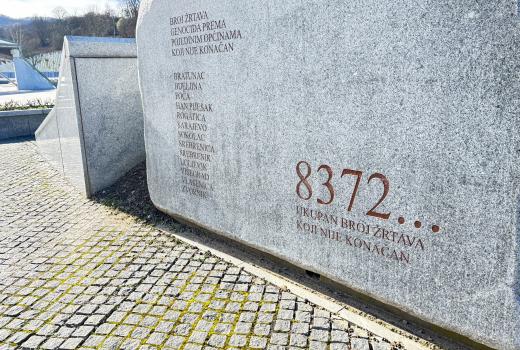
Two years have passed since the UN adopted a Resolution on Srebrenica, a small town in Eastern Bosnia and Herzegovina which experienced the biggest war crime in Europe since World War II. The Resolution created an uproar across the region, but two years later it appears to be forgotten by the media and politicians. Last year, Al Jazeera Balkans remembered the event and the importance of the document on the first anniversary of the adoption of the Resolution. This year, only a few media outlets – such as Detektor, which had its own article, Patria agency with its news, then Vijesti and others, transmitting the announcement of Denis Bećirović, Chairman of the Presidency of Bosnia and Herzegovina, from social networks, and Radio Sarajevo, which had a short news item – remembered the Resolution. None of them are based in the entity of Republika Srpska.
Almost 31 years ago, on 11 July 1995, the United Nations declared “safe area”, Srebrenica, fell to Bosnian Serb forces. Over the next few days, more than 8,000 Bosniaks, men and boys, were murdered or went missing from Srebrenica and surrounding areas, which housed up to thousands of refugees who fled from various parts of Bosnia and Herzegovina. The remaining women, children, and elderly, roughly 30,000 people, were forcibly removed from the town and transferred elsewhere. The events that took place in and around Srebrenica have been judicially established a genocide by the International Criminal Tribunal for the former Yugoslavia (ICTY) in 2004 and the International Court of Justice (ICJ) in 2007.
The ICTY, a United Nations court of law for crimes committed during the conflicts in former Yugoslavia during the 1990s, carried out its mandate from 1993-2017 with 161 individuals indicted. The last rulings carried out by the ICTY took place in 2017 with Ratko Mladić’s life imprisonment for the crime of genocide. A total of 7 individuals were charged with genocide or aiding and abetting genocide by the ICTY. Out of the 7 individuals, 5 were given life imprisonment while the additional 2 were given 35 years of imprisonment each.
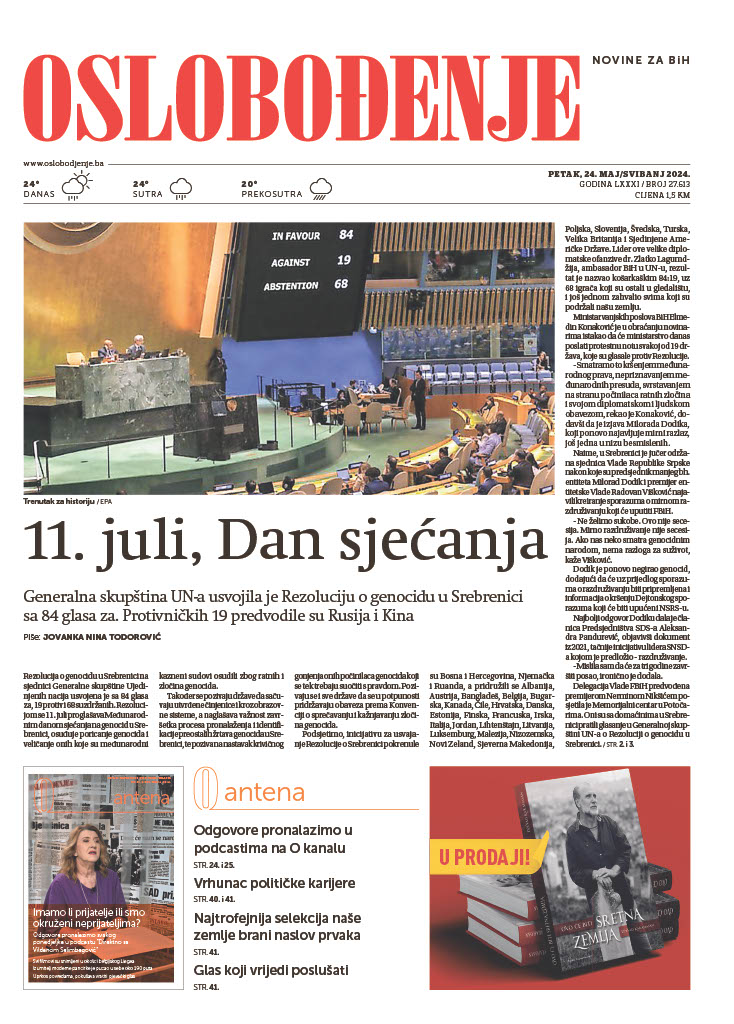
On 23 May 2024, the United Nations General Assembly adopted a resolution on Srebrenica declaring 11 July an International Day of Reflection and Commemoration of the 1995 Genocide in Srebrenica. This Resolution aligns with the rulings of the ICTY and emphasises that the criminal accountability for genocide cannot be tied to any group or community as a whole but is individualized. The main role of the Resolution is to commemorate the victims of the Srebrenica Genocide and to condemn genocide denial and glorification of war criminals. However, it became the subject of controversy in the region. An increase in the number of cases of denial of genocide compared to the previous year was also recorded.
Encompassing the year 2024, the Srebrenica Memorial Center published a Genocide Denial Report documenting the number of times the Srebrenica Genocide was denied throughout the year in Bosnia and Herzegovina and the region. There was a significant increase in denials from the year 2023 with 90 reports to the year 2024 with 305 reports. This significant increase can partially be attributed to the UN Resolution on Srebrenica being adopted as an increase in reports were seen in April and May that year.
In 2024, it is written in the aforementioned report, "a significant increase in cases of denial is noticeable in April and May. This period was marked by the adoption of the resolution on Srebrenica in the UN, which ultimately caused an increase in the number of cases of denial of genocide and a greater number of actors who deny genocide". According to the report, the media contributed significantly to this, considering that the Resolution in the UN initiated such a wide public debate, with the media in the Republika Srpska and the Federation of BiH reporting in a divided manner.
On the day of the Resolution being adopted, SRNA (News Agency of Republika Srpska, which is under significant influence of the ruling party in Republika Srpska), published an article diminishing the legitimacy of international law and order by openly denying the rulings of the ICTY and the decisions made by the UN General Assembly. A narrative that was commonly displayed in media from Serbia and Republika Srpska was the UN Resolution being “anti-serb”. A few days before the adoption of the Resolution, the newspapers Glas Srpske reported on the former Republika Srpska Minister of Internal Affairs, Siniša Karan, now president of Republika Srpska, opinions on the Resolution, or as he refers to it “the anti-Serb resolution.” Karan, and many other politicians in Republika Srpska and Serbia, believe the Resolution was a direct attack on Serbs and Serbian people. However, not once are Serbs, Serbia, or Republika Srpska ever mentioned within the Resolution.
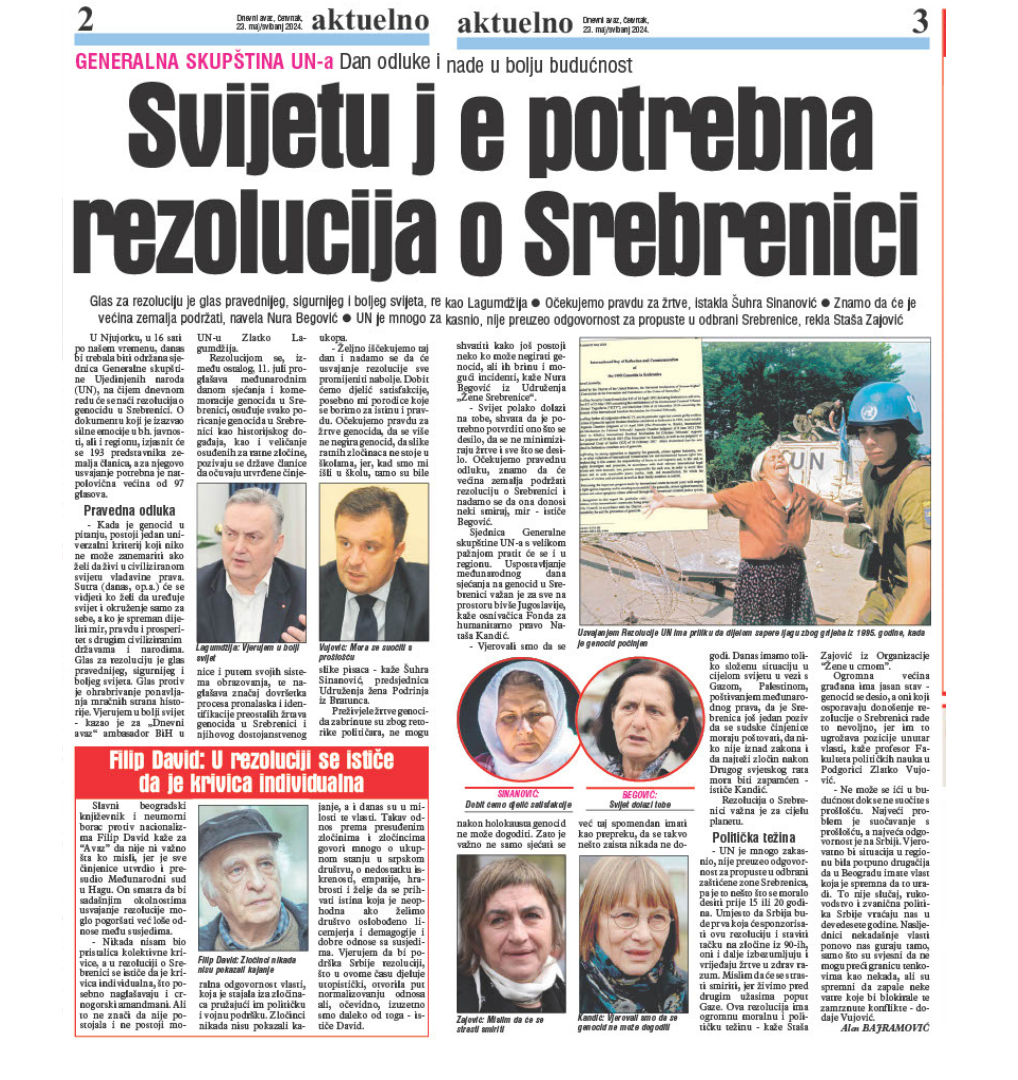
While SRNA, Glas Srpske, and other various media platforms in Republika Srpska were notably criticizing the Resolution, media platforms in Federation of BiH, such as daily newspapers Oslobođenje and Dnevni avaz, highlighted the benefits of the Resolution for victims and the importance of remembrance such as promoting the use of educational tools to teach future generations. These articles can be seen in their print publications on 23 May and 24 May of 2024.
The published articles from Oslobođenje and Dnevni avaz did acknowledge how the Resolution may contribute to further division of the country as well, highlighting the controversies around it in Serbia and Republika Srpska. Dnevni avaz spoke with Belgrade writer and anti-nationalism activist, Filip David, who explained that while the Resolution is based on the findings of the ICTY, it may worsen relations in the region. Even with the emphasis on individual responsibility in the Resolution, David (who passed away last year) believed the actions from Serbia towards the adjudicated crimes and criminals speaks volumes about the stance of the Serbian government.
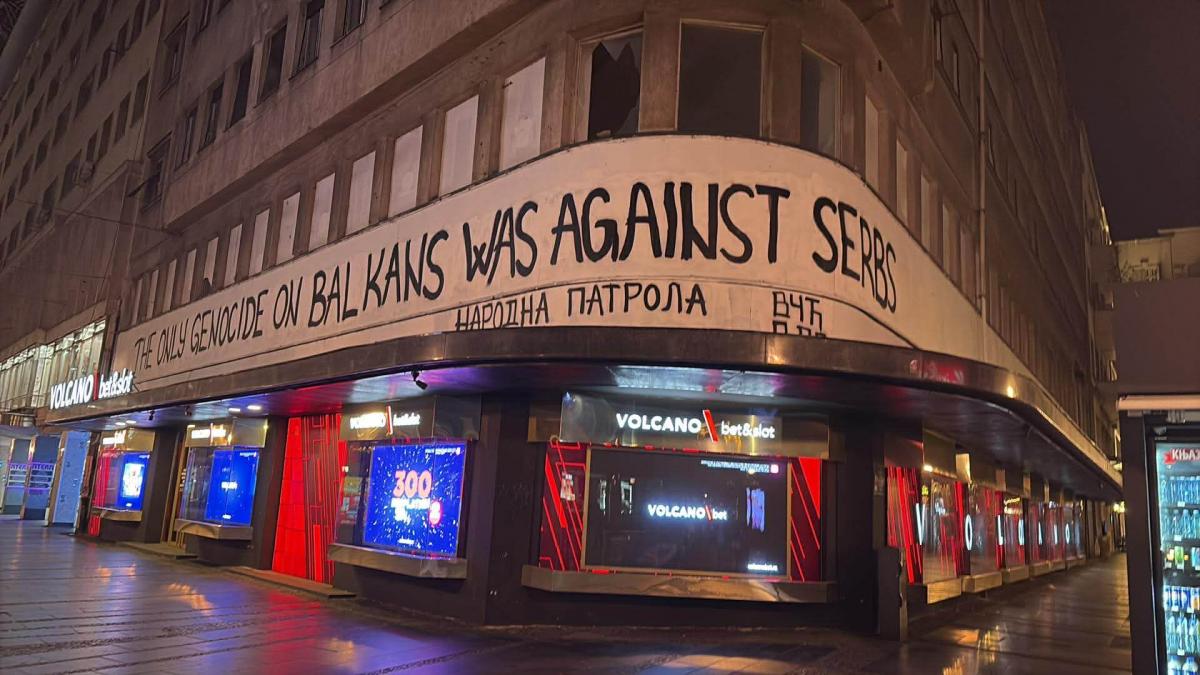
In the following month of the Resolution being adopted, in large letters, written only in English, the words “The only genocide in the Balkans was against the Serbs” appeared on a building in Knez Mihailova, a popular pedestrian street in the heart of Belgrade, Serbia. The graffiti is signed by the Narodna Patrola (People’s Patrol), a far-right organization. As of 2026, this graffiti is still present in the same location and has yet to be removed and has even been repainted since the original in 2024. The graffiti still stands in a public space passed by Belgrade residents and tourists and spreads the false claim even further.
Two years ago, especially in the months leading up to its adoption, the Resolution on Srebrenica attracted significant attention from politicians and the media. One therefore might assume that the first or second anniversary of the Resolution would also receive significant media coverage. However, this assumption has proven to be incorrect. Last year, Al Jazeera Balkans reported on the first anniversary, this year only a few portals. It seems that the Resolution is no longer an interesting topic for the media in Bosnia and Herzegovina, especially in the Republika Srpska.